This is the first installment of this blog’s “Iranian Genealogies” series, which highlights Iranian family trees and genealogies. The goal is to bring attention to these all-too-rare examples of Iranian family history preservation. If you have a family tree/genealogy book that you would like to be featured, please use the contact form to let me know!
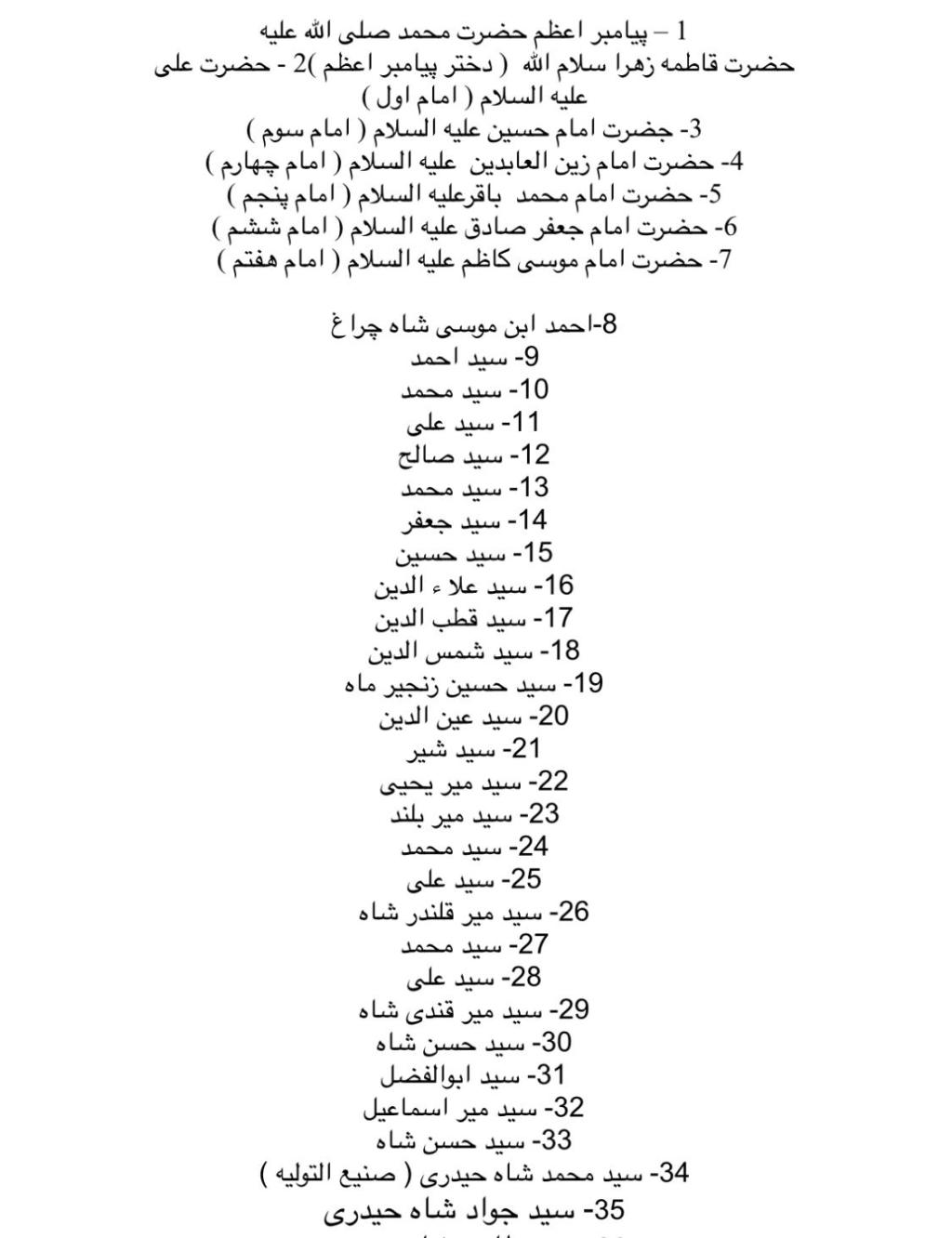
The above image is of the patrilineal ancestry of the Shah Heydari (شاه حیدری) family. They claim to be seyyed (سید) through the 7th Shia Imam Musa al-Kazem. Seyyed are patrilineal descendants of Ali ibn Abi Taleb, who married the Prophet Mohammad’s daughter.
- Prophet Mohammad (پیامبر اعظم حضرت محمد صلی الله علیه)
- Fātemeh (daughter of the Prophet) (فاطمه زهرا)
- Emām Hosein (Third Imam) (امام حسین)
- Emām Zein al-Ābedin (Fourth Imam) (امام زین العابدین)
- Emām Mohammad Bāgher (Fifth Imam) (امام محمد باقر)
- Emām Ja’far Sādegh (Sixth Imam) (امام جعفر صادق)
- Emām Musā Kāzem (Seventh Imam) (امام موسی کاظم)
- Ahmad ibn Musā Shāh Cherāgh (احمد ابن موسی شاه چراق)
- Seyyed Ahmad (سید احمد)
- Seyyed Mohammad (سید محمد)
- Seyyed Ali (سید علی)
- Seyyed Sāleh (سید صالح)
- Seyyed Mohammad (سید محمد)
- Seyyed Ja’far (سید جعفر)
- Seyyed Hosein (سید حسین)
- Seyyed Alā’ al-Din (سید علاء الدین)
- Seyyed Qotb al-Din (سید قطب الدین)
- Seyyed Shams al-Din (سید شمس الدین)
- Seyyed Hosein Zanjir-e Māh (سید حسین زنجیر ماه)
- Seyyed Ain al-Din (سید عین الدین)
- Seyyed Shir (سید شیر)
- Seyyed Mir Yahyā (سید میر یحیی)
- Seyyed Mir Boland (سید میر بلند)
- Seyyed Mohammad (سید محمد)
- Seyyed Ali (سید علی)
- Seyyed Mir Ghalandar Shāh (سید قلندر شاه)
- Seyyed Mohammad (سید محمد)
- Seyyed Ali (سید علی)
- Seyyed Mir Ghandi Shāh (سید میر قندی شاه)
- Seyyed Hassan Shāh (سید حسن شاه)
- Seyyed Abolfazl (سید ابوالفضل)
- Seyyed Mir Esmā’il (سید میر اسماعیل)
- Seyyed Hassan Shāh (سید حسن شاه)
- Seyyed Mohammad Shāh Heydari (Sani’ al-Tolieh) (سید محمد شاه حیدری)
- Seyyed Javād Shāh Heydari (سید جواد شاه حیدری)
This family tree was prepared in the 1940s-1950s by Kazem Shah Heydari, son of Seyyed Mohammad “Sani’ al-Tolieh” Shah Heydari (#34 in the tree). It was copied from a much older family tree written on deer hide.
Seyyed Mohammad “Sani’ al-Tolieh” Shah Heydari was a calligrapher and engraver at the shrine of Imam Reza, the eighthTwelver Shia imam, in Mashhad. His descendants still have some of his calligraphy pieces. It so happens that Seyyed Mohammad’s purported 24th great grandfather (#8 in the tree) was Imam Reza’s younger brother. In addition to income from his properties, which included an orchard in the village of Kenevist, Seyyed Mohammad earned an annual salary of wheat and about 100 tomans for his services to the Shrine. Seyyed Mohammad held the title Sani’ al-Tolieh (صنیع التولیه) (See the Titles section of this website’s Names page for more information). He was bedridden for the last two years of his life due to a fall from his house’s roof. Seyyed Mohammad spent those last years doing calligraphy and engraving stones for seal rings from his bed, before passing away in 1943.


What is known about Seyyed Mohammad’s life comes from family oral history. However, Seyyed Mohammad had a brother named Seyyed Ismail Shah Heydari, whose fame led to accounts of his life from the Mashhad community. Seyyed Ismail was born in Mashhad around 1865 to a family of landowners and religious mystics. He died in 1941 and was buried in a pavillion in the Imam Reza Shrine. His brother Seyyed Mohammad was buried next to him when he died two years later.
In the early 20th century, Seyyed Ismail constructed a hoseinieh—Mashhad’s third largest—on Sarshur Alley. Hoseinieh are congregation halls used for Shia commemoration rituals, such as mourning during Muharram. Seyyed Ismail’s hoseinieh was also used to social and political gatherings. A recent news article stated that he was “the most famous and liked non-clergy religious figure in Mashhad in the years following the [Iranian] Constitutional Revolution.” One Mashhadi elder recalled that Seyyed Ismail would carry around twigs and tap people on the head to bless them. He also said that people would follow Seyyed Ismail in the streets and kiss his hand. Seyyed Ismail was also known to vocally curse drunkards, barbers who shaved men’s beards, and sinners.
A physical description of him has been passed down: “[He was] thin, upright and strong . . . [w]ith a fawn-colored beard and short moustache, bright gray piercing eyes with puffy cheeks and white skin. He wore a large pistachio green turban and tied a green shawl around his waist, then on top of that he wore an expensive robe, and he always wore yellow slippers, and while wearing a thin robe, he took both his hands out of the sleeves.” (Jām-e Jam Article).
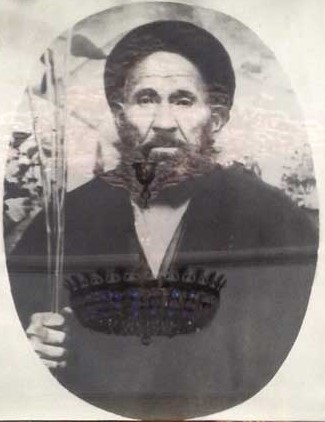
Seyyed Ismail was known as Aghā-ye Shāh (آقای شاه). His other nickname was Seyyed Heydari. Some sources claim that “Heydari” became part of his nickname because he would occasionally stop and exclaim “Heydar!” while walking. This is a possible origin of the “Heydari” part of the Shah Heydari name, the word “Shah” having been used by others in the family previously, (see #26, #29, #30, and #33 in the family tree). See this article and this online encyclopedia entry for more information about Seyyed Ismail. The book, Tārikh-e Mashhad-e Ghadim (تاریخ مشهد قدیم) also contains information about him, including that he was called “Barbari,” which indicates possible Hazara or Qizilbash ancestry.
What began as a family tree written on deer hide centuries ago has preserved the origins of a family that has now spread from Iran to across the Middle East, Europe, North America, and East Asia.
 Iranian Genealogy
Leave a comment