Iran has a history of family heraldry, but it is not a continuous one. A Eurasian tradition of clan symbols existed in Iran until the Islamic Conquest. The personal use of stamp seals continued from ancient times, which eventually became intertwined with the Ottoman tughra. It was not until Iran’s modern interactions with European powers that family heraldry emerged again in Iran, this time adhering to European heraldic conventions. This blog post seeks to summarize this largely undiscussed history.
Tamga and Nishan
Ancient agro-pastoralists developed a series of clan-specific symbols to mark property (Niccolò Manassero, Tamgas, a Code of the Steppes. Identity Marks and Writing among the Ancient Iranians, 61). These symbols are called tamga in the Turkic context and nishan in the Iranian context (Id., 60). Nishans retained their importance, even as urban, literate societies began to proliferate and exert influence (Id., 61, 64). They increasingly appeared on coins and seals during the Achaemenid Dynasty (550-330 BC) (Id., 62).
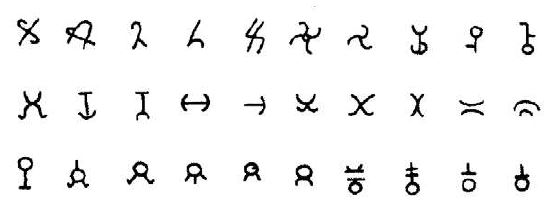
the Persian Period Revisited.” Iran 36 (1998); Niccolò Manassero, Tamgas, a Code of the Steppes. Identity Marks and Writing among the Ancient Iranians
By the time of the Arsacid Dynasty (247 BC – 224 AD), nishans were being used by nobility (e.g., Gondophares of the Indo-Parthian Kingdom) (Id.; Sergey Yatsenko, Nishan Signs of Aristocracy of Sasanian Iran, 181). However, their widespread use by various social strata is documented during the Sasanian Dynasty (224-651 AD) (Yatsenko, 181, 183). Local residents added their nishans to the relief at Qir-Karzin “Gardanah Givlamish” (Id., 183), the Sasanian defensive walls in Derbent contain the nishans of hundreds of stone masons (Murtazali Gadjiev, On the Intepretation of Derbent’s Mason Marks, 147), priests such as Tansar and Kartir had nishans (Yatsenko, 198), and the nobility displayed their nishans on items from headwear to quivers (Yatsenko, 183).
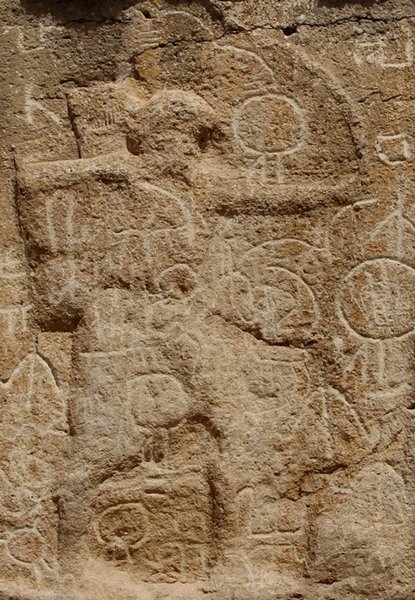

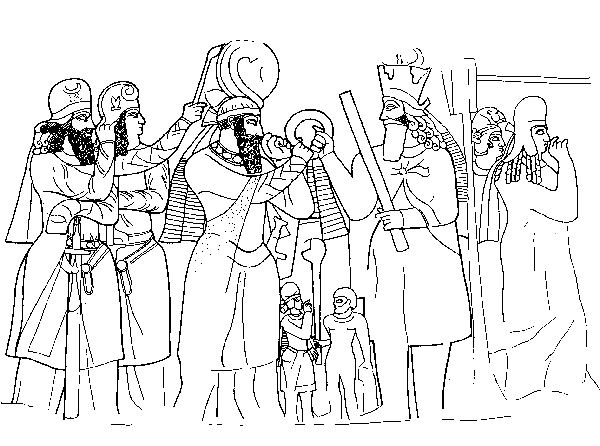
Indeed, nishans appear to be used as both clan and personal symbols (Manassero, 64-65; Yatsenko, 198). Sasanian Shahanshahs developed a tradition of using personal nishans, which were often borrowed from a predecessor (Yatsenko, 184-187). More complex, three-component nishans became popular by the 5th century (Id., 181). Scholarship has traditionally labeled these as monograms, but they instead appear to be personal modifications of clan symbols (Manassero, 64-65; Yatsenko 181).
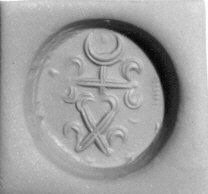

Turkic peoples also adopted tamgas in ancient times (Manassero, 60). Kazakh and Mongolian clans used these symbols. Notably, the various branches of the Oghuz Turks adopted unique tamgas. A few of these Oghuz tribes, namely the Ayrom, Afshar, Bayat, Bayandor, and Salur, have descendants in Iran and the Iranian diaspora.
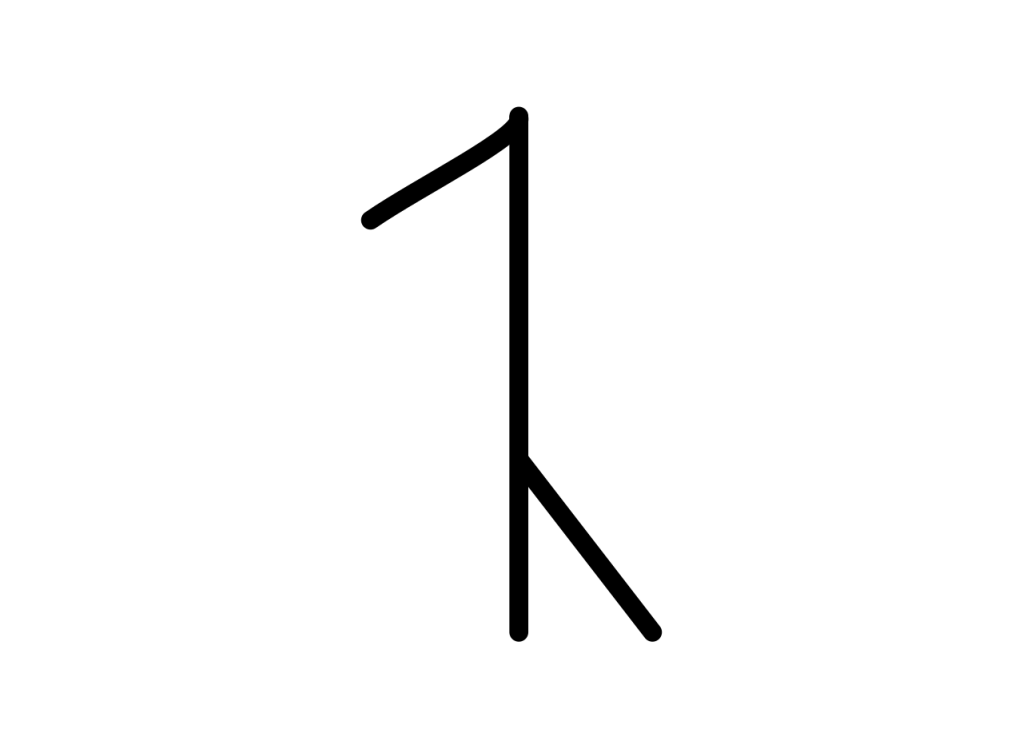
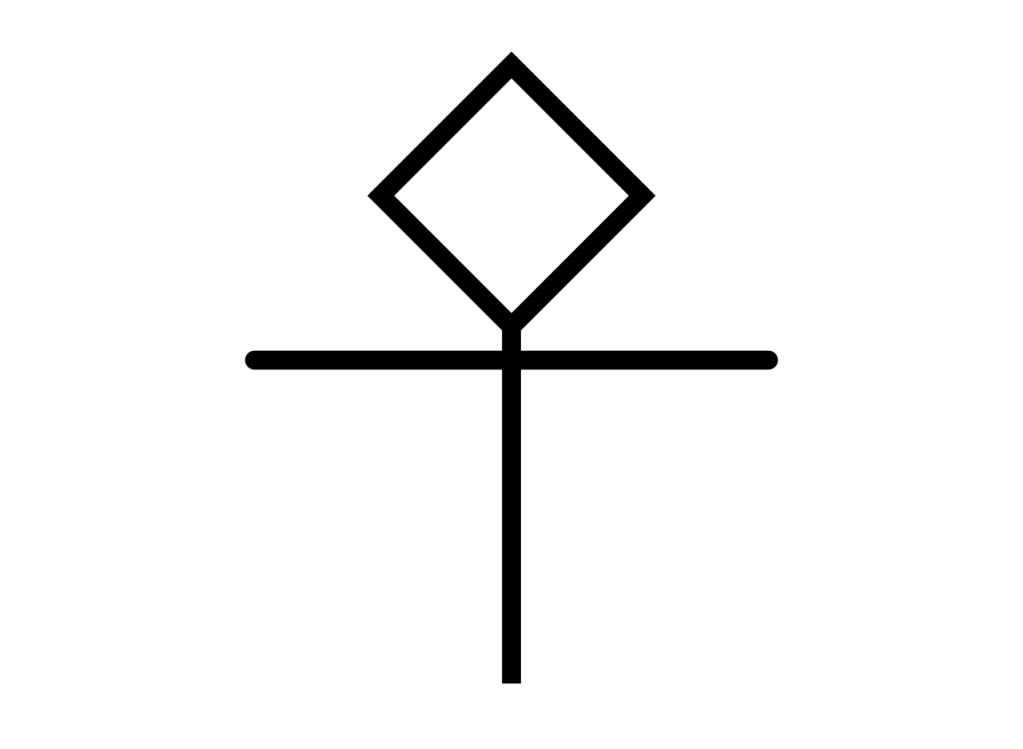


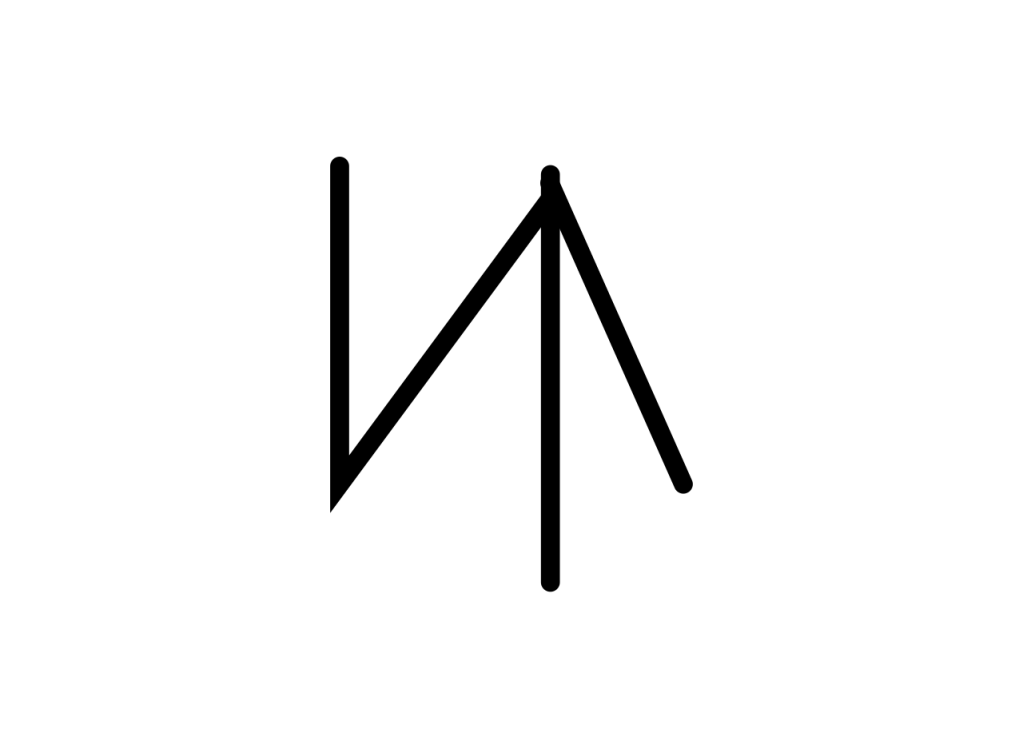
For an excellent discussion of nishan/tamga, see Ancient Iran‘s Twitter thread on the subject. Reza Kalani has also written papers and books on Sasanian nishan.
Stamp Seals and Tughra
Because they are solely unique to individuals, stamp seals and tughra are not examples of Iranian family heraldry. However, because they became a sort of stand-in for personal heraldry in Iran, it is worthwhile to discuss these common symbols and distinguish them from earlier and later Iranian heraldic practices.
Stamp Seals
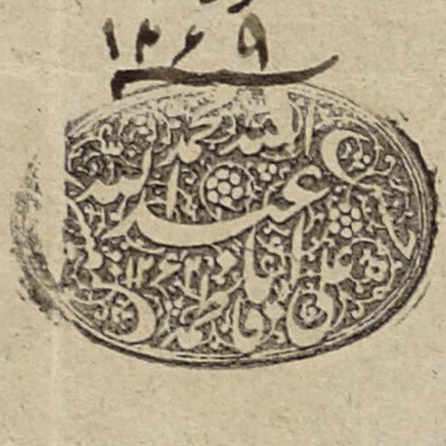
Stamp seals have a long history reaching back to ancient Iran. During the Sasanian era, they depicted animals, busts of individuals, and nishan (Touraj Daryaee & Kiarash Gholami, Sasanian Seals and Bullae at the Freer Gallery of Art and Arthur M. Sackler Gallery). Their owners used them as signatures (Id.). These seals were often made of carnelian, chalcedony, agate, jasper, onyx, and sard (Id.).
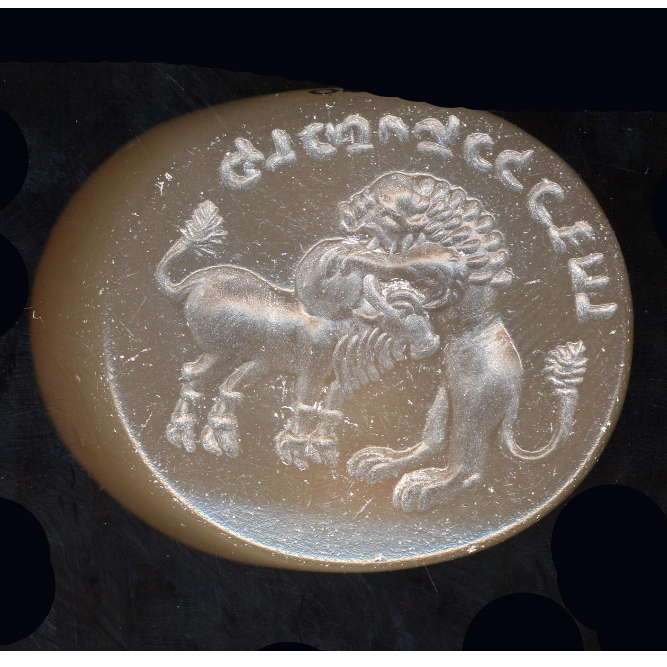
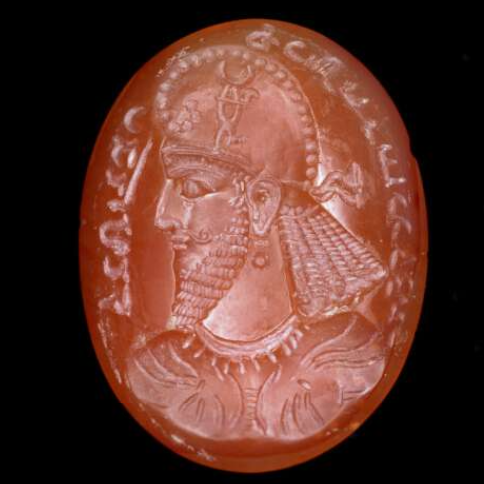
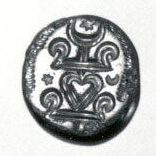
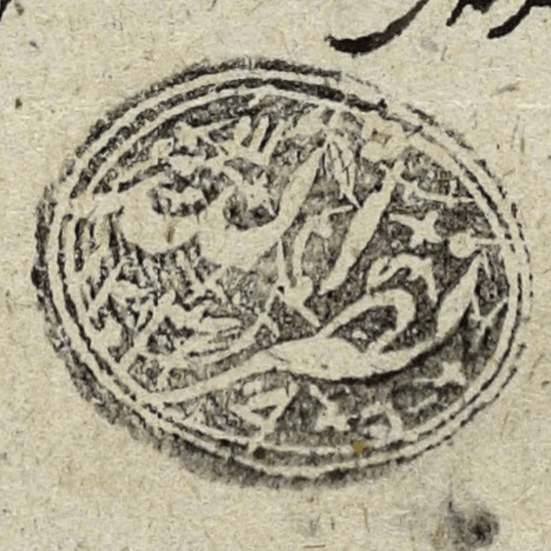
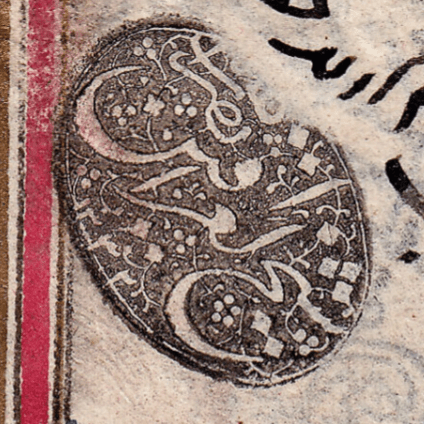
While the indigenous tradition of nishan largely disappeared from Iran after the Islamic conquest, the tradition of personal stamp seals continued. Post-conquest stamp seals depicted calligraphic inscriptions of the owner’s name, the owner’s title, or a phrase. Stamp seals were predominantly used by upper-class Iranian men to sign documents, but women also used them.
- To see stamp seals used during the Parthian and Sasanian dynasties, see Ancient Iran‘s excellent Ancient Iranian Seals Project.
- To see stamp seals used by Iranian women during the Qajar era, see Akram Mohammadizāde, Barresi-ye mohr-hāye zanān dar dore-ye Qājār.
- To see the various stamp seals used by Safavid shahs, see Mohr-hāye dorān Safavi
- To see the various stamp seals used by Qajar shahs, see Reza Ferāsati, Mohr-hāye Shāhān Qājāriye.
- To see many examples of stamp seals used during the Qajar era, go to Women’s Worlds in Qajar Iran, click “Browse,” and select the “seals” subject.
Tughra
A tughra is a calligraphic signature that originated in the Ottoman Empire and spread to Iran. Ottoman legend recounts that an illiterate sultan invented the tughra when he dipped three of his fingers in ink and used them to mark a page (Courtney A. Stewart, Branding Through the Ages: The Tughra in Ottoman Art). In reality, the earliest known tughra is that of the second Ottoman Sultan, Orhan, dating back to the 1320s (Dr. Ercan Menciz, About Tugra). Later, rulers of the Iranian Qara Qoyunlu, Aq Qoyunlu, Safavid, Afsharid, Zand, and Qajar dynasties also adopted tughras (Kāmrān Afshār Mohājer & Samar Kalhor, Barresi-e basari-e toghrā va mohr-hāye saltanati-e Irān (Ilkhāni – Qājār)).
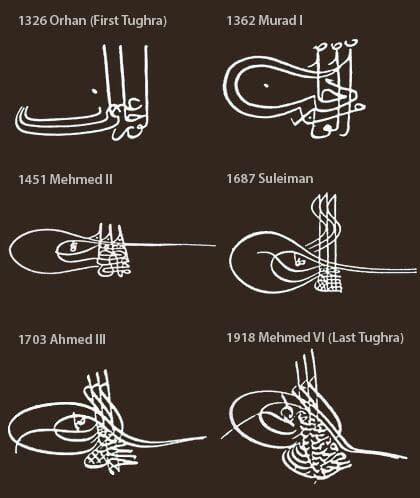
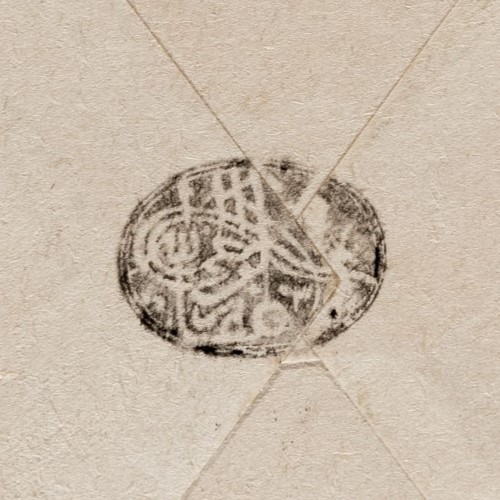
Stamp seals and tughra differ in their origin, but over time they became more difficult to distinguish. Although stamp seals were of Iranian origin and tughra were of Ottoman origin, the line between the two became blurred when post-Islamic conquest Iranian stamp seals began to depict calligraphy. Some stamp seals even contained tughra. However, the distinction remained, as Iranian rulers often used seals and tughra separately (Kāmrān Afshār Mohājer & Samar Kalhor, Barresi-e basari-e toghrā va mohr-hāye saltanati-e Irān (Ilkhāni – Qājār)). Both symbols continued to be used until the end of the Qajar era.
For a comprehensive summary of the stamp seals and tughra used by Iranian monarchs from the Ilkhanid to the Qajar dynasties, see Kāmrān Afshār Mohājer & Samar Kalhor, Barresi-e basari-e toghrā va mohr-hāye saltanati-e Irān (Ilkhāni – Qājār).
Modern Heraldry
Since the late Qajar era, Iranian heraldry has existed under the influence of western conventions (Reza Kalani, “Introduction” in “Iranian Municipalities’ Book of Arms”). This line of heraldry exists independently of tamgas, nishans, and individualized stamp seals and tughras. In the modern era, Iranians have acquired heraldic symbols in one of two ways: (1) grant by western countries; or (2) unilateral adoption by families.
arms granted by western countries
In a few instances, Iranians have been granted arms by western countries.
Great Britain
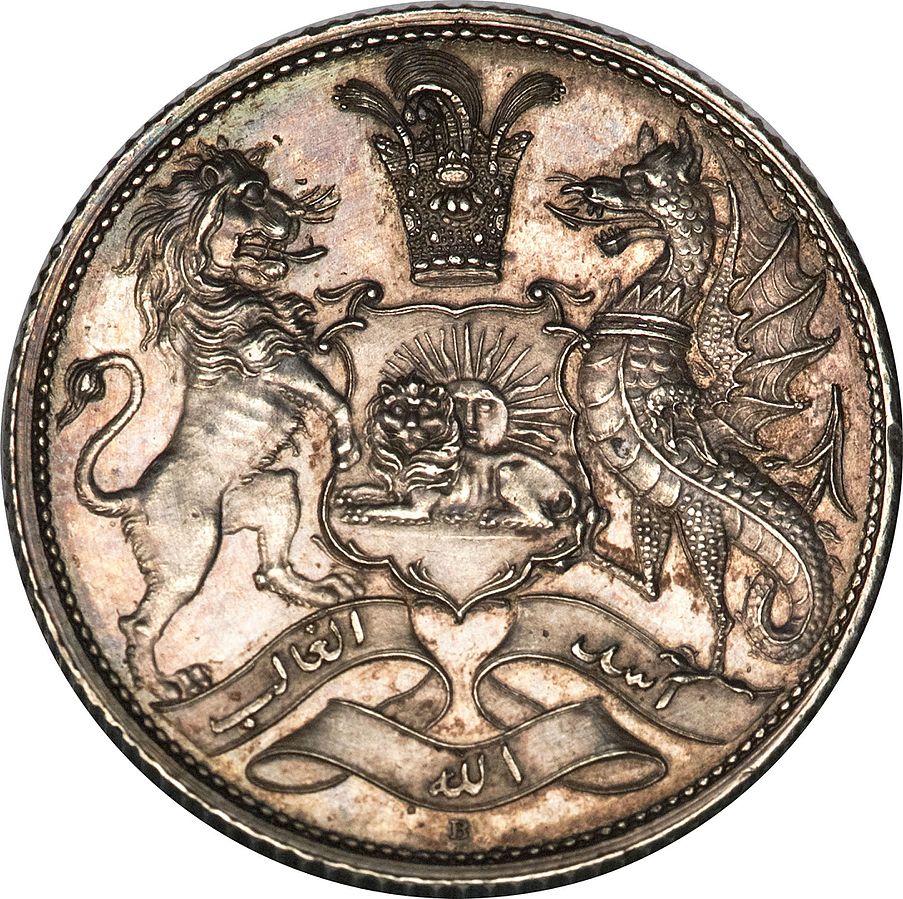
To commemorate the 1828 modification of the Definitive Treaty of Friendship and Alliance Between Great Britain and Persia (1814), gold and silver medals were struck and given to dignitaries (NumisBids; Treaties Concluded Between Great Britain and Persia, 7-8). The medals depicted a coat of arms. The coat of arms shows a lion and dragon supporting a shield with the lion and sun symbol. Above the shield is the Kiani Crown, which Fath Ali Shah Qajar commissioned in 1797. Below the shield is a banner reading “اسدالله الغالب,” an epithet for Ali ibn Abu Taleb. It is uncertain whether this was intended to be a coat of arms for the Qajar Dynasty, Fath Ali Shah Qajar, or Iran. The dies were made by W. Bain and struck in Great Britain (NumisBids).
Russia
In 1865, Naser al-Din Shah Qajar was presented with an album from St. Petersburg, Russia containing Qajar family arms drawn by Alexander Alexandrovich Fadeyev (Qajar Association), a heraldic artist in the Arms Department of the Russian Senate’s Heraldry Department (M.P. Golovanov, Painted by Alexander Fadeyev). These arms exemplify the modern trend of conforming Iranian elements to European heraldic conventions.
The shield portrays the lion and sun symbol of Iran. On top of the shield sits a Safavid helmet. A griffin and dragon act as supporters on the left and right side of the shield, respectively. The supporters stand on a compartment consisting of Iranian eslimi design. The Order of the Lion and the Sun encircles the shield.
Encompassing the arms is a green “mantle and pavilion” lined with ermine. In Iranian-Islamic culture, green is synonymous with heaven, nature, and rebirth (Kazem Danesh & Mohammad Khazai, The Symbolism of the Color Green in Iranian-Islamic Art and Culture). The color also features prominently in Iranian flags dating to the Safavid dynasty. The pavilion (the mantle’s domed top) is a symbol of sovereigns in continental European heraldry (it is absent from English and Scottish heraldry) (Arthur Charles Fox-Davies, A Complete Guide to Heraldry, Chapter 24). Atop the pavilion sits the Kiani Crown.
The Qajar shahs continued to use these arms through to the end of the dynasty (Zarrinkafsch, The Iranian Heraldry, International Qajar Studies Quarterly) (e.g., an armorial rug from about 1910 depicts the Qajar coat of arms). These arms are an important development in Iranian family heraldry. Their design drew upon previous heraldry and influenced future heraldry. The shield and supporters in Fadeyev’s design were clearly influenced by the arms described above (NumisBids). The later Pahlavi coat of arms largely adopted the arrangement of these Qajar arms.

Canada
The Canadian Heraldic Authority exercises the Sovereign’s powers to grant arms to Canadian individuals and organizations. The Authority has granted arms to at least three Iranian-Canadians: Frederick Kasravi, Sharagim Habibi, and Darah Dilmaghani. These arms conform to western heraldic standards but contain Iranian symbolism.
Heraldry unilaterally adopted by families
In the modern age, there has been an interest in family heraldry outside of heraldic countries’ regulations. Several Iranian families have adopted coats of arms or symbols in this way. Below are a few examples of unilaterally adopted Iranian family heraldry.
Qajar Family
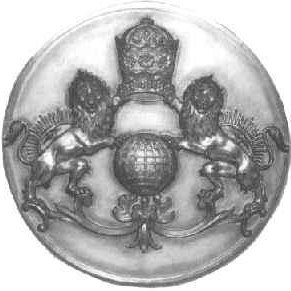
The Qajar family apparently used a separate coat of arms from the ones described above on letterheads and official documents from the royal court (Qajar Pages, Emblems of Qajar (Kadjar) Rulers). The arms depict two lions with suns rising behind their backs standing on a scroll and holding up the Kiani crown, with a globe between them. One Qajar descendant, Mohammad Firouz, adopted these arms and added his initials to them (Id.). A slightly different version of these arms appeared as emblems on caps during the late Qajar era (Mitya Ivanov, Persia: Qajar Armed Forces cap badge?, Gentleman’s Military Interest Club). These later arms had a lit grenade in the place of the globe, and the lions were holding up swords. Interestingly, the coronation banner of Reza Shah Pahlavi had a version of these arms with a lit grenade, but the lions were not holding swords (Id.).
Pahlavi
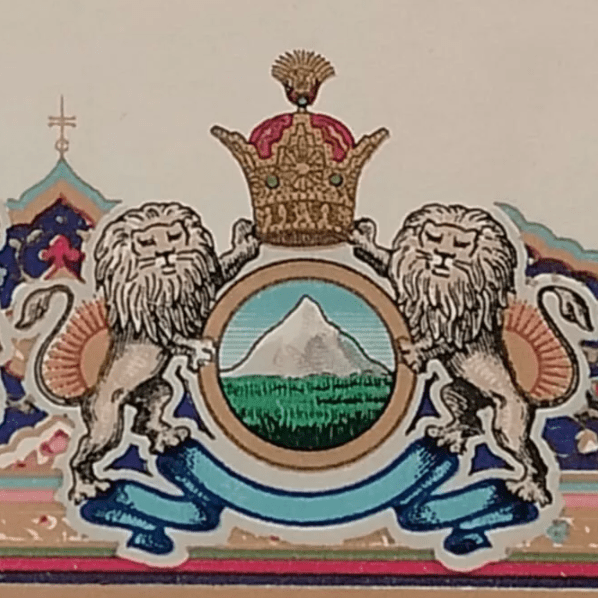
It seems that the 1939 marriage of Mohammad Reza Pahlavi to Fawzia of Egypt in might have been the catalyst for the Pahlavi Dynasty to adopt a coat of arms similar to their Egyptian counterpart, the Muhammad Ali Dynasty (Reza Kalani, Introduction in the Iranian Municipalities’ Book of Arms). These initial Pahlavi arms appear heavily based on the potential Qajar family arms discussed above. Two lions with the sun rising behind their backs stand on a blue scroll, supporting a shield depicting Mount Damavand and the Pahlavi crown above. These arms appeared on the wedding menus and were included in the background of wedding portraits.
At some point between 1939 and 1945, Mohammad Reza Shah Pahlavi adopted a new dynastic coat of arms (1945 is the date of the earliest firman I can find with this new coat of arms). Vladimir Romanowski de Bończa supposedly designed these arms (Kiani Concept, آرم دربار شاهنشاهی ایران).
The shield is divided into quarters. The top right quarter depicts the Zoroastrian faravahar symbol. The bottom right quarter depicts the Sasanian simorgh symbol. The top left quarter depicts the lion and sun. The bottom left quarter depicts the zulfiqar sword. At the center is Mount Damavand. The shield has a border of Sasanian-style vegetal designs, the Pahlavi crown sits atop it, and the Order of Pahlavi hangs under it.
Two lions holding scimitars support the shield. They stand on a compartment consisting of Iranian eslimi design. A blue ribbon is woven throughout the eslimi with the motto “مرا داد فرمود و خود داور است.” Mohammad Reza Shah Pahlavi selected this verse by Ferdowsi as the royal motto on July 5, 1943, upon the proposal of the Iranian Academy (iroon.com).

Davallu Qajar Tajbakhsh
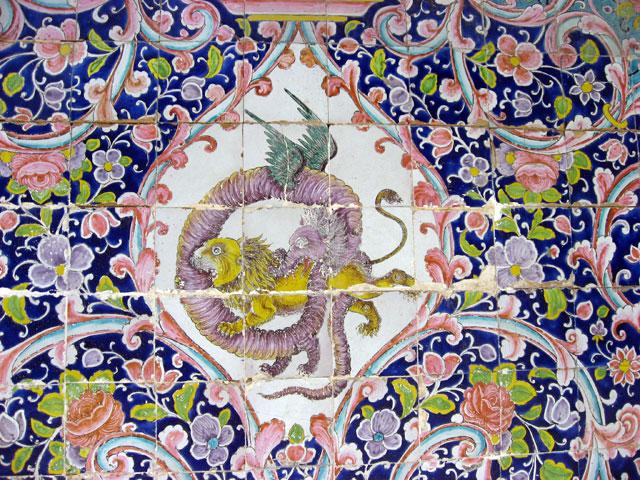
Mohammad Hassan Khan Tajbakhsh “Salar Homayun” prepared a family tree of the Davallu Qajar Tajbakhsh family in 1958/9. At the bottom of the page, he drew a proclaimed “family symbol.” The symbol depicts a lion and dragon intertwined in battle, biting each other. This same image appears in Golestan Palace (Archnet) and in the city of Kerman’s Pahlavi era arms (Book of Iranian Municipalities’ Arms (1951-1979), 285).

Zarrinkafsch-Bahman
The Zarrinkafsch-Bahman family has adopted a coat of arms inspired by the Qajar coat of arms in commemoration of several intermarriages with the Qajar family (Arian K. Zarrinkafsch-Bahman). The shield is blue with a golden sun and depicts a silver lion resting atop a silver rock on green ground (Id.). The shield differs from that of the Qajar family in that the lion is silver instead of gold, and does not hold a sword in its hand (Id.). Encompassing the shield is a lion hide topped by a gold crown around red headgear (Id.).
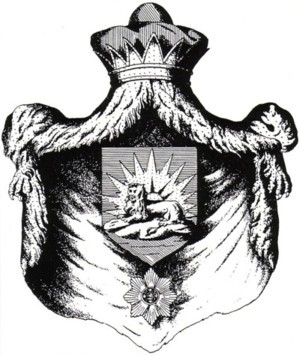
Afshar naderi
The Afshar Naderi family has adopted a coat of arms that is an amalgamation of various Iranian symbols. In the upper section of the coat of arms is a faravahar with a 1 Ashrafi coin stylized as a sun rising behind it. In the lower section is a shield supported by a winged lion and a griffin. Behind the shield is the Sasanian derafsh kaviani. The shield is divided into quarters: In the upper quarter is the Achaemenid falcon; in the lower quarter is the lion and sun symbol; in the left quarter is the Afshar crown; in the right quarter is a crown similar to the Pahlavi crown. At the bottom of the arms is a ribbon with the colors of the Afshar Dynasty imperial standard.
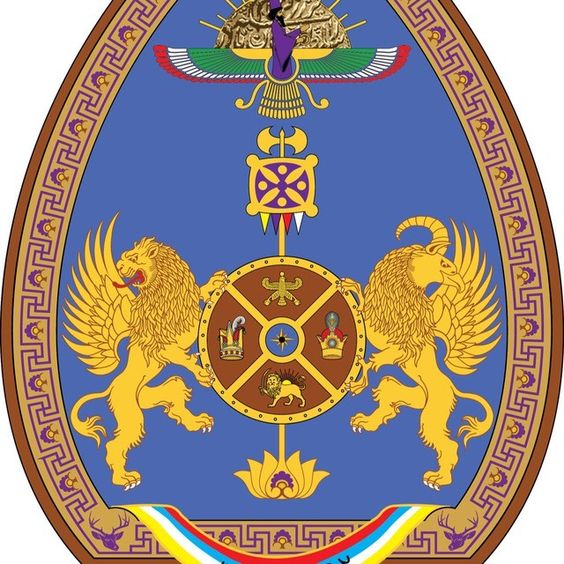
Suren pahlav
Shapour Suren-Pahlav has adopted the supposed nishan of the ancient House of Suren as his family arms. This nishan is attributed to the House of Suren by Kaveh Farrokh.

Conclusion
Those Iranians interested in adopting heraldry emblematic of their families have a long and varied history of indigenous symbols to draw upon. The historical continuum of Iranian family heraldry, from nishan to European-style coats of arms, continues to this day. Hopefully, this summary succeeded in conveying this largely undiscussed history to a wider audience.
Further Reading
Iranian municipality coats of arms
Throughout the 1950s and 1960s, the “Flag and Arms Study Commission” (کمیسیون مطالعه آرم و پرچم) designed flags and coats of arms for Iranian municipalities with the intent that they be used in sporting events and festivals in the style of European countries. To develop the designs, city councils informed the Commission about each municipality’s history, culture, geography, and economics. After deliberation within the Commission, Vladimir Romanowski de Bończa created the designs, which the city councils then altered and approved. These coats of arms were largely abandoned after the Iranian Revolution. These elusive Pahlavi era municipal coats of arms have been collected and published in the Iranian Municipalities’ Book of Arms (1951-1979).
mamluk heraldry
The Mamluk Sultanate of Egypt (1250-1517) also had an indigenous system of heraldry similar to the European tradition. There, the sultans and amirs had personal blazons. These blazons followed specific symbol and design conventions, and they were inheritable. For more information on Mamluk Heraldry, see The History of the Blazon in the Mamluk Period by Filiz Çakır Phillip.
 Iranian Genealogy

Leave a comment